
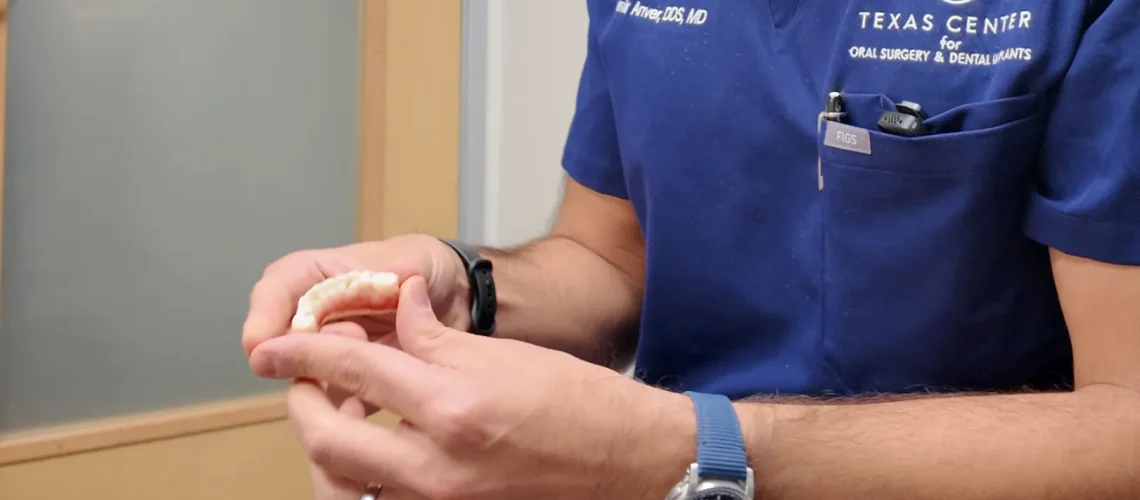
When patients first hear the term fixed full arch dental implants, the word that tends to stick is “fixed.” It is the part that separates this solution from everything they may have tried before. A fixed restoration does not come out at night. It does not sit on the gums held in place by suction or adhesive. It is anchored to implants placed in the jaw, and it stays put while you eat, speak, laugh, and sleep.
That single difference changes almost everything about how the teeth feel and function. Still, most patients arrive with the same set of questions, and they deserve straight answers before committing to treatment. Below, we walk through what fixed full arch dental implants actually are, who they are for, and what to expect from the process.
What “Fixed” Really Means
A fixed full arch restoration replaces an entire row of teeth, upper, lower, or both, with a prosthesis secured to a small number of implants, typically four to six. Because it is screwed onto the implants rather than resting on the gums, only your surgical team or dentist removes it, and only for maintenance. You never take it out yourself.
This is the core distinction between fixed implants and a traditional or snap-in denture. Removable dentures rely on the gums and palate for support, which limits bite force and often means slipping, sore spots, and a restricted diet. Fixed full arch implants transfer chewing force into the jawbone the way natural teeth do, so patients can return to eating the foods they had given up.
Who Fixed Full Arch Implants Are For
Most of our full arch patients fall into one of two groups. The first is people who have been living with dentures and are tired of the compromises. The second is people facing the loss of most or all of their remaining teeth, often because of advanced gum disease, repeated fractures, or failing restorations that are no longer worth saving.
If your teeth are failing one by one, a fixed full arch solution can end that cycle in a single, coordinated plan rather than a string of separate extractions and patch repairs. Instead of replacing teeth reactively, we build a foundation designed to last.
Candidacy comes down to bone, health history, and goals, all of which we evaluate with 3D imaging supported by true surgical expertise during a consultation. Even patients who have been told they have too little bone for implants often have more options than they were led to believe. In the hands of experts, modern techniques allow nearly all patients to be candidates
What to Expect During Treatment
The process is more streamlined than most people assume. It begins with a consultation and detailed planning: cone beam imaging, digital scans, and a review of your medical history. From there we map implant positions before surgery ever begins. Equally importantly, our lab and restorative team collaborate with you and our surgeons to design a cosmetic and functional plan for your new teeth that the surgery will support.
On surgery day, any remaining failing teeth are removed, the implants are placed, and a fixed temporary set of teeth is attached the same day. Patients leave with a full arch of teeth, not an empty mouth and not a removable plate. The procedure is performed under IV sedation or general anesthesia, so you are comfortable and unaware throughout.
You may be wondering, why place temporary teeth rather than permanent ones? While it is possible to manufacture permanent teeth quickly, there are at least two huge benefits to patients in starting with temporary teeth. First is that temporary teeth are easily modifiable. We believe our patients deserve to have teeth that they love. Sometimes, this means patients may want to see some changes in the design or the fit of their teeth. Using temporaries allows patients to easily test drive any cosmetic or bite changes they would like rather being “stuck with” teeth they thought they would love but just don’t.
A healing period follows while the implants integrate with the bone. During this time you wear the fixed provisional and follow a modified diet. Once healing is complete, we deliver the final prosthesis, custom-designed in the in-house lab behind our All-In-One Smile solution to fit precisely and look natural across your full smile.
If you want a closer look at the surgical side of these cases, we cover it in depth in Why Full Arch Dental Implants Are More Complex Than Most Patients Realize.
Working Alongside Your Dentist
Fixed full arch treatment does not replace your relationship with your general dentist. It complements it. Many of our patients are referred to us specifically for the surgical and full arch portion of their care, then return to their dentist for routine checkups and ongoing general dentistry.
We see this as a partnership. Your dentist knows your history and your long-term needs. Our role is to handle the complex surgical work that oral and maxillofacial training prepares us for, then coordinate so nothing falls through the cracks. If you are wondering why that training matters for a case this involved, we explain it in Who Should Perform Dental Implant Surgery?
Living With Fixed Full Arch Implants Long Term
Once your final teeth are in place, day-to-day life is refreshingly ordinary. You brush and clean around the prosthesis, you keep regular hygiene visits, and you eat normally. There are no adhesives, no nightly soaking, and no wondering whether your teeth will hold.
Long-term success depends on two things: the quality of the original surgical plan and consistent maintenance afterward. Implants that are well planned, correctly placed, and properly cared for can last for decades. That is exactly why provider selection matters so much on the front end.
It is also why we stand behind our work. As a private practice that controls both the surgery and the lab, we are accountable for the entire outcome, and if an implant ever fails to integrate as expected, we make it right at no cost to you. That level of ownership is difficult to find when surgery and lab work are split across separate businesses that can point fingers at each other.
Ready to Explore Your Options?
If you are considering fixed full arch dental implants, or you have been told your teeth cannot be saved, the right next step is a consultation with a board-certified oral surgeon who performs this work every day. We will look at your bone, your history, and your goals, and give you an honest answer about what is possible.
Schedule your consultation with Texas Center for Oral Surgery & Dental Implants. We serve patients across the Dallas-Fort Worth area.
Frequently Asked Questions
Are fixed full arch dental implants permanent?
The implants themselves are designed to become a permanent part of your jaw, and the prosthesis attached to them is fixed, meaning it does not come out for daily cleaning. The final teeth can be serviced or replaced by our team over the years if needed, but you will not remove them yourself.
How are fixed full arch implants different from dentures?
Dentures rest on the gums and can be taken in and out. Fixed full arch implants are anchored to implants in the jawbone and stay in place permanently. That difference translates into stronger bite force, no slipping, and no adhesives.
Will I leave surgery with teeth?
In most cases, yes. We place a fixed provisional set of teeth the same day as surgery, so you do not go through a stretch without teeth. Your final restoration is delivered after the implants have healed.
Does insurance cover fixed full arch dental implants?
Coverage varies widely by plan. Many patients use a combination of benefits and financing. Our team reviews the specifics with you during your consultation so there are no surprises.
How long is recovery?
Most patients manage initial recovery within one to two weeks, following a soft diet while the implants integrate. Discomfort is usually less than patients expect, and we stay available throughout healing.