Wisdom tooth extraction is a surgical procedure performed to remove third molars, which are often prone to complications such as swelling, infection, and pain. The Texas Center for Oral Surgery & Dental Implants recommends extraction to prevent dental issues like misalignment after braces, difficulty cleaning, decay, or cavities on adjacent teeth. These procedures are best completed by an oral and maxillofacial surgeon to address existing infections or pain caused by problematic wisdom teeth.
I felt this new sense of self... It made such a difference. I didn't understand how much of an impact it would give me, not just from confidence, but also eating and feeling normal again.


There are many reasons that people have their wisdom teeth removed. At the Texas Center for Oral Surgery & Dental Implants, our oral and maxillofacial surgeons find that the most common reasons include:
Generally, we recommend having your wisdom teeth extracted at a younger age, typically between the age of 18 and your early 20s. During this period, most people’s wisdom teeth should be protruding through the gums, and the root has developed to around two-thirds of its full size.
However, in some cases, dentists will recommend having them removed earlier or later, depending on the individual’s circumstances. If you are experiencing dental issues due to your wisdom teeth, we recommend having them removed to prevent further complications.
The first step to having your wisdom teeth extracted is scheduling a consultation with one of our experienced oral and maxillofacial surgeons.
At your consultation, we will perform an oral assessment, take scans of your wisdom teeth, discuss your medical history, answer any questions, and alleviate any concerns you may have about the procedure.
We will also discuss your treatment plan and determine which type of anesthesia is right for you. We offer three types of wisdom teeth removal: local, nitrous oxide, and IV sedation.
Before your procedure, your surgeon will provide a list of preoperative instructions. Depending on the anesthesia, your doctor may ask you to come in on an empty stomach. Your doctor will give you a list of post-operative instructions to follow post-surgery, which will help foster optimal healing and recovery.
On the day of surgery, your surgeon will administer your selected type of anesthesia to reduce any discomfort during the procedure. Next, using exceptional precision and the latest extraction techniques, your surgeon will make a small incision in the gum tissue and gently remove your wisdom teeth. Then, depending on the size of the incision, it may be closed with sutures to promote healing. Once the treated site is closed, you will be placed in our comfortable recovery room until the anesthesia wears off.
Generally, wisdom teeth extraction takes between forty-five minutes to an hour. Our surgeons are highly-efficient at performing exceptional wisdom teeth removal surgeries and strive to complete the procedure in under one hour.
However, the length of your procedure will depend on your customized treatment plan, the number of wisdom teeth extracted, and the number of impacted teeth.
You can expect your wisdom teeth removal surgery at Texas Center for Oral Surgery to be a comfortable, painless experience. Since you are under the influence of anesthesia and the area will be numb, you should not feel any pain or discomfort.
After your wisdom teeth removal, you will be placed in our comfortable recovery room until the anesthesia wears off. Once you wake up, you may feel groggy, lightheaded, sleepy, or confused and will need to have someone else drive you home.
If you have general anesthesia or IV sedation, you will need to arrange for someone else to pick you up and drive you home after your wisdom teeth removal at Texas Center for Oral Surgery. While not required for local anesthesia, arranging for a ride home ensures you have a smooth and safe mode of transportation after your surgery.
This depends on which type of anesthesia you choose for your procedure. If you choose general anesthesia, the effects will last between forty-five minutes to one hour. With IV sedation, it is common to feel groggy twelve to twenty-four hours following the surgery.
To ensure you feel comfortable moving forward with your wisdom teeth removal at the Texas Center for Oral Surgery & Dental Implants, it is best to fully understand what you expect before, during, and after the procedure.
You may experience discomfort once your anesthesia wears off in the first twenty-four hours after your procedure. You may also notice other common symptoms like bruising, swelling, and inflammation around the extraction sites. Do not use a straw, forcefully spit, or aggressively brush your extraction site.
You can expect your discomfort to peak between days one and three and your symptoms to alleviate in the three to seven days following your procedure. After one week, you can resume brushing the extraction site but be very gentle.
Around two weeks after your wisdom teeth removal surgery, your extraction site should not interfere with your daily life. While it may not look completely normal and still feel tender to the touch, it should be almost completely healed. At this point, you should be able to resume brushing and flossing your teeth normally.
While every patient is unique, we recommend taking at least three days off to prioritize healing and recovery. This is when your discomfort will be at its peak, with swelling in the facial area. However, a whole week is best before resuming your normal routine.
Though we recommend you avoid food and drink in the first several hours after your wisdom teeth removal, you can begin eating liquid foods within twenty-four hours afterward. It is essential to avoid hard, crunchy, or extremely hot foods in the first week after your procedure, as these may impact the extraction site.
In the first couple of days after removing your wisdom teeth, it is best to stick to a diet of soft foods, jello, milk,
In most cases, patients have all their wisdom teeth removed simultaneously, reducing recovery time and the risk of developing dry sockets and infections. However, this will ultimately depend on your doctor’s recommendation and individual treatment plan.
Similar to other surgeries, there are risks associated with wisdom teeth removal. These risks include infection, dry sockets, and damage to nearby teeth, tissue, and nerves. Dry sockets are one of the most common complications of wisdom teeth removal and occur when a blood clot fails to form, exposing the underlying bone.
It is best to choose an experienced oral and maxillofacial surgeon with excellent credentials to increase the safety of your procedure and reduce these risks. At Texas Center For Oral Surgery & Dental Implants, our doctors strongly understand how to perform this wisdom teeth removal surgery and achieve ideal results for every patient.
At the Texas Center For Oral Surgery & Dental Implants, your smile is our top priority. Our surgeons work hand-in-hand with orthodontists to ensure your smile looks and functions properly after your wisdom teeth surgery.
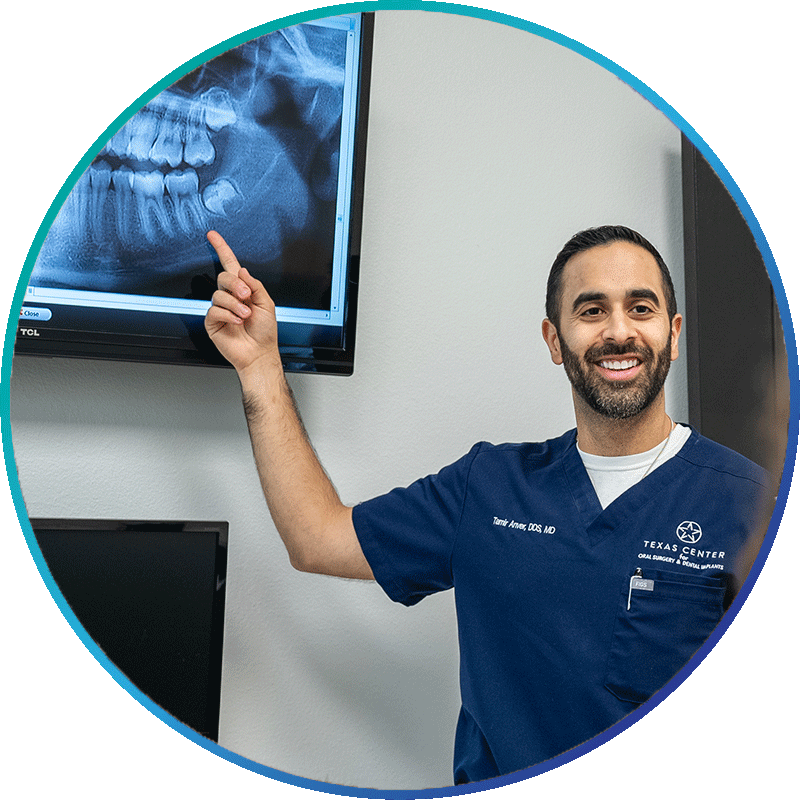
The last teeth to erupt, typically by our teenage years, wisdom teeth rarely have enough room to grow in properly. Due to this and the upward curvature of the jawbone, they often grow sideways—pushing against healthy teeth—and sometimes failing to erupt fully through the gums. This causes swelling, infection, pain, misalignment, and sometimes cysts and tumors.
Ultimately, these late-erupting teeth can cause a great deal of difficulty and yet you don’t need them to eat or speak normally. Considering all of this, we recommend seeing an oral and maxillofacial surgeon for diagnosis and possible extraction before allowing these issues to arise.
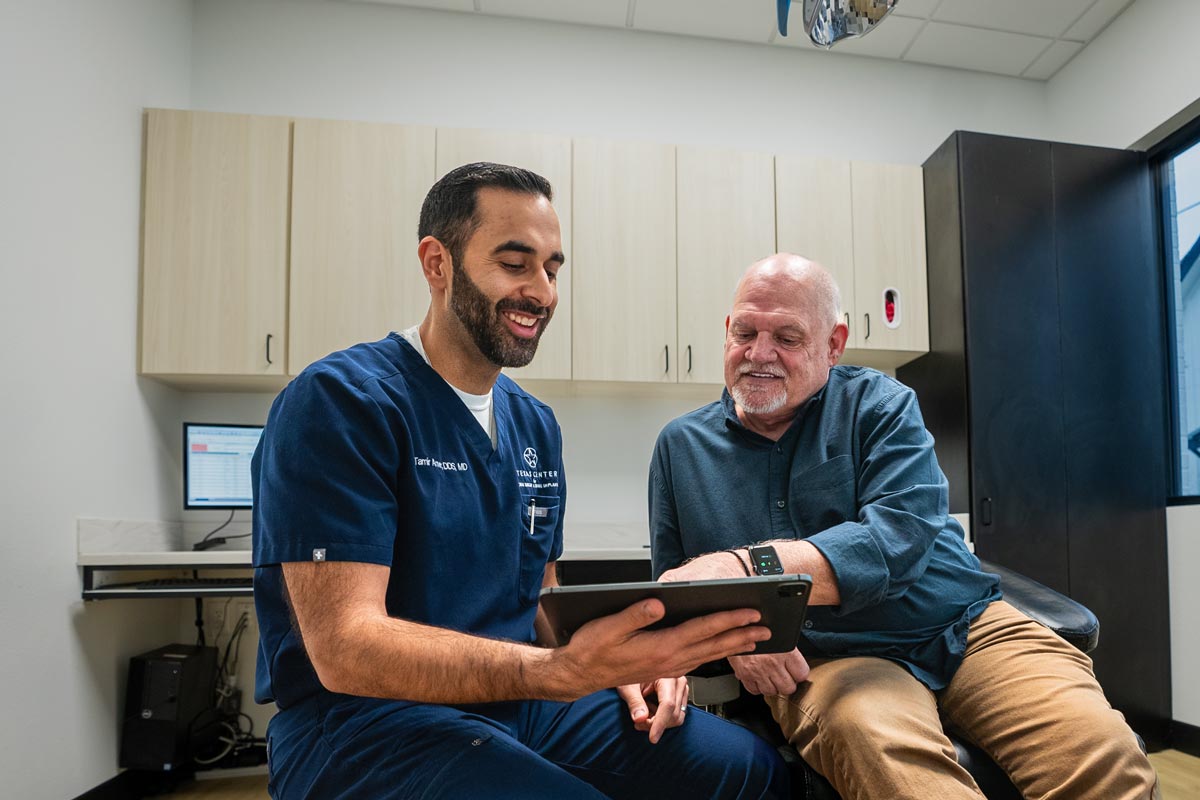

Wisdom teeth are often situated very close to important structures like nerves, sinus cavities, and other teeth, so it’s important to find an expert who can remove those teeth as carefully as possible while prioritizing your safety and comfort.
We’re dual-degreed oral and maxillofacial surgeons with both medical and dental degrees who perform wisdom tooth removal daily. We’ve removed more than 10,000 wisdom teeth and do more than 1,000 IV sedation cases each year. We’re not only wisdom tooth removal specialists, we know best how to keep you comfortable throughout the entire process.
All oral and maxillofacial surgeons must complete a minimum of four years of advanced training in a hospital-based surgical residency after dental school. After accomplishing that, our doctors became board-certified by the American Board of Oral and Maxillofacial Surgery (ABOMS) by passing rigorous examinations and a peer evaluation process. In addition, we’re on staff at Medical City Lewisville and MC Denton.
You won’t find a more qualified practice for wisdom teeth extractions than Texas Center for Oral Surgery and Dental Implants.