
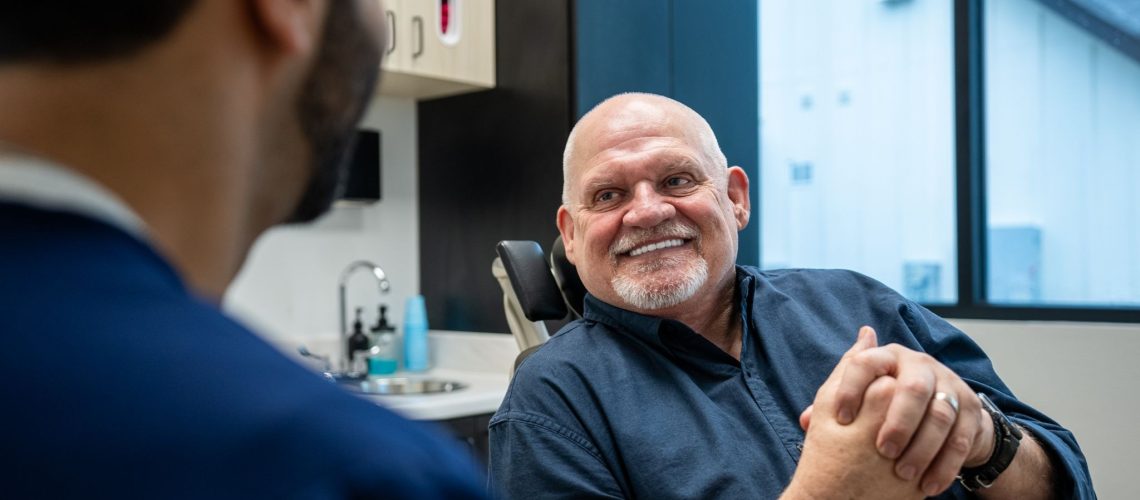
If you are dreading an upcoming oral surgery appointment, you’re not alone, and you are probably more anxious right now than you need to be.
We hear it constantly, from patients scheduled for a simple tooth extraction and from parents bringing in a teenager for wisdom teeth removal. The words vary. Terrified. Dreading it. Apprehensive. But the pattern is the same. Someone walks in bracing for the worst, and walks out saying some version of “that was so much easier than I expected.” You can see that pattern echoed across our patient stories, again and again.
It is one of the most consistent things we hear from patients after treatment, and it says less about the procedure and more about how anxiety works.
Why the Anticipation Is Often Worse Than the Procedure
Fear of oral surgery rarely comes from firsthand experience. It comes from stories, old dental memories, or simply not knowing what is about to happen. The mind fills in the blanks with worst-case scenarios, and by the time a patient sits in the chair, they have often imagined something far more intense than what actually occurs.
Modern oral surgery at Texas Center, especially with IV sedation available, is built around minimizing exactly what patients fear most: pain, awareness during the procedure, and not knowing what is happening to them. When those three things are addressed directly, the experience tends to look very different from what anxious patients pictured going in.
What Actually Helps Reduce the Fear
We know you may be nervous, and we don’t treat that as an afterthought. From your very first phone call through every step of your care, we go out of our way to help you feel at ease. That commitment is the foundation of our approach to Redefining the Dental Implant Experience®. We pride ourselves on delivering care that helps anxious patients get comfortable and stay comfortable, so the surgery itself often turns out to be the part you worried about most and struggled with least.
A few things come up again and again from our patients who walked in nervous and walked out relieved.
Clear explanations before anything happens. Understanding what a procedure involves, step by step, removes a lot of the fear that comes from uncertainty. When a patient knows what to expect, there is less room for the mind to invent something worse. Our pre-operative instructions are written for exactly this reason, so nothing about the day feels unfamiliar.
Not feeling pressured into a decision. Patients consistently mention appreciating our doctors who lay out the real options, including the option to wait, rather than pushing straight to surgery. That kind of honesty tends to build trust fast, which itself lowers anxiety.
Sedation that actually works as intended. For patients who choose IV sedation, many describe the procedure as a blank space in their memory. They remember getting settled in, and then remember being told it is over.
Follow-up that continues after the visit. A personal call from the surgeon later that day, checking in on how someone is doing, is something our patients bring up often and are clearly not expecting. It reassures them that they are not on their own once they leave the office. Our post-operative instructions also spell out exactly what to expect at home, so there is no guessing during recovery either.
If You Are Nervous, Here Is What to Expect
Your first stop is a consultation, not a surgery date. That visit exists so you can ask questions, understand your specific case, and get a realistic picture of what is ahead before anything is scheduled. Nothing about that conversation should feel rushed or one-sided. You can read more about our doctors and their approach before you ever step into the office.
If sedation is part of your plan, it will be explained clearly, including what you will and will not feel and remember. If you are managing dental anxiety more broadly, that is worth mentioning at your consultation. Tell your doctor. It changes how the visit is paced and explained.
Whatever specific worry is keeping you up the night before your appointment, whether it’s pain, timing, sedation, or recovery, the answer is almost always more reassuring than the fear itself. A few common questions come up again and again.
Frequently Asked Questions
Is it normal to feel anxious before oral surgery?
Yes. It is one of the most common feelings patients describe before a procedure, even for relatively straightforward cases. Most of that anxiety comes from not knowing what to expect rather than from the procedure itself.
Will my doctor pressure me into treatment I am not ready for?
No. A good consultation lays out your options honestly, including situations where waiting is reasonable, so you can make a decision that fits your circumstances.
What if I am too anxious to make it through a consultation?
Tell the team when you schedule. Dental anxiety is common enough that most practices, including ours, are used to adjusting pacing and explanations to help patients feel more in control.
Does sedation help with anxiety, not just pain?
Yes, for many patients it addresses both. IV sedation is often described as removing the anxious experience of being aware during the procedure, not just the physical sensation.
If nervousness about oral surgery has kept you from scheduling a consultation, reach out to our team and let us know. We will walk you through exactly what to expect before you ever get near a treatment date.